

Energy Transition Leadership Briefing | March 2026
Monthly Insights for Executives in Australia’s Clean Energy Sector
March 2026 Edition
Opening Snapshot
March didn’t quietly progress the transition. It reframed it.
The US/Israel–Iran conflict has triggered what the IEA is calling one of the most severe global energy shocks in decades, with disruption to oil, gas, and critical industrial supply chains on a scale comparable to the 1970s crises (The Guardian). Roughly 20% of global oil flows through the Strait of Hormuz, and disruption there has already driven price spikes, infrastructure damage, and global inflation pressure (New York Post).
For Australia, this is not abstract. The country imports around 90% of its liquid fuels, leaving it structurally exposed to global supply shocks and price volatility (The Guardian). The result is immediate: higher costs, supply chain stress, and growing political pressure around “energy security.”
But underneath the noise, something more important is happening: The war is accelerating the transition by proving exactly why it’s needed……or it should.
Short-term disruption. Long-term inevitability.
The global energy shock is a new starting point
The conflict has rapidly evolved into what is effectively an energy war, with infrastructure targeted and shipping routes disrupted (The Spectator Australia). Oil losses have already exceeded levels seen in historic crises, while gas supply disruptions rival those seen during the Ukraine war (AP News).
This has flowed directly into:
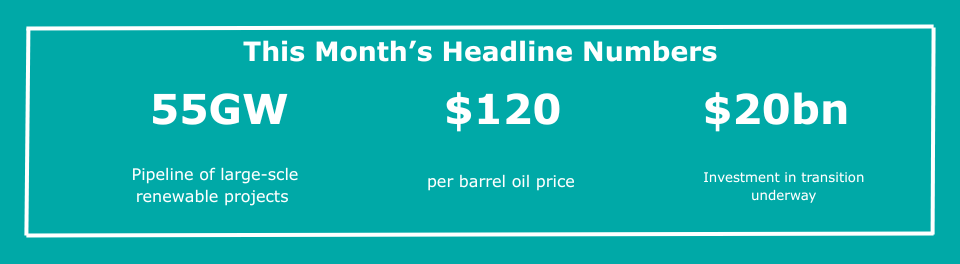
- Oil price spikes toward ~$120/bbl before partial easing (New York Post)
- Stagflation risks emerging across major economies (Wall Street Journal)
- Manufacturing cost blowouts and supply chain disruptions globally (The Australian)
And crucially, the disruption extends beyond fuel:
- Fertilisers, petrochemicals, helium, and industrial inputs are all impacted (The American Bazaar)
This is not just an energy crisis. It’s a system-wide cost shock.
Australia: exposed in ways that matter
Australia likes to think of itself as an energy superpower. That illusion doesn’t survive contact with reality. Despite being a major exporter of coal and LNG, Australia remains:
- Heavily dependent on imported refined fuels
- Low on strategic fuel reserves (well below IEA benchmarks) (The Guardian)
- Increasingly exposed to global logistics and pricing shocks
The consequences are already visible:
- Petrol and diesel prices surging sharply
- Regional fuel shortages emerging
- Political pressure building around emergency fuel measures (Daily Telegraph)
At the same time, manufacturers are warning of brutal cost increases tied to energy and materials inflation (The Australian).
So, the uncomfortable truth lands: Australia is energy-rich, but systemically vulnerable.
The paradox: disruption now, acceleration later
Here’s where the narrative splits, and where most commentary falls apart.
Short term, the war is clearly negative for the transition:
- Higher input costs for wind, solar, batteries, and transmission
- Shipping delays and insurance premiums
- Increased financing risk
In simple terms; everything just got harder to build.
Long term, the exact same shock strengthens the transition case:
- Fossil fuel dependence = geopolitical exposure
- Electrification = domestic control
- Renewables = non-interruptible supply
You can blockade oil. You can’t blockade sunlight.
This is why analysts and policymakers are increasingly framing the transition as a security imperative, not just a climate one (SBS Australia).
Market structure: what actually shifted this month
Even before the war, March was already pointing in a clear direction. The conflict just amplified it. Storage becomes core infrastructure. Battery projects are no longer marginal plays. They are:
- Price setters in key intervals
- Essential for system stability
- Increasingly tied to legacy coal exit strategies
The war reinforces this: fast-response, domestic assets become more valuable when global supply is unstable.
Transmission remains the bottleneck
Nothing about geopolitics fixes Australia’s core constraint:
- Project pipeline is strong
- Capital is still available
- Technology is proven
But. Transmission delivery is still lagging. Now that lag isn’t just an efficiency problem.
It’s a resilience risk.
Industrial transition becomes existential
Stories around:
- Tomago aluminium
- Hydrogen hubs (e.g. Kwinana)
- Biomethane and fuel substitution
…all point to the same issue: can heavy industry operate without exposure to volatile global fuel markets? The war makes that question urgent, not theoretical.
Retail pricing: temporary relief, structural tension
Regulatory signals suggest:
- Some near-term easing in electricity prices due to renewables
- But ongoing pressure from fuel costs and subsidy roll-offs (ABC News)
So, households should get:
- Price relief from lower wholesale electricity signals
- But higher overall cost-of-living pressure
Which is politically… messy.
Policy and narrative collision
The war has created a dual narrative, and both sides think they’re winning.
Narrative 1 (security via fossil fuels)
- More domestic gas
- Slower transition
- Protect industry from volatility
Narrative 2 (security via electrification)
- Accelerate renewables and storage
- Reduce exposure to global fuel markets
- Build domestic energy resilience
Both are responding to the same trigger. Only one scales long-term. The energy transition will win out.
Material risks (now sharper than before)
- Transmission failure becomes a security issue. Not just a delay problem anymore
- Supply chain inflation persists. War-driven cost pressures bleed into all project economics
- Policy lag becomes dangerous. Misaligned rules now create real system risk
- Capital becomes more selective. Investors will tolerate less uncertainty
Bottom line
The transition hasn’t stalled. It’s been stress-tested.
- Fossil systems just proved how fragile they are
- Renewable systems just proved why they’re necessary
- The grid just proved it’s not ready
So, the real conclusion is uncomfortable but obvious: the transition is no longer just about decarbonisation. It’s about whether the system can function under pressure.
And right now, the answer is: not yet.
Prepared by Freshwater Group. Helping companies secure leadership and critical talent for the energy transition.
- Posted by Freshwater Group
- On March 27, 2026
- 0 Comment